Tips & Tricks for Packing CSA Boxes
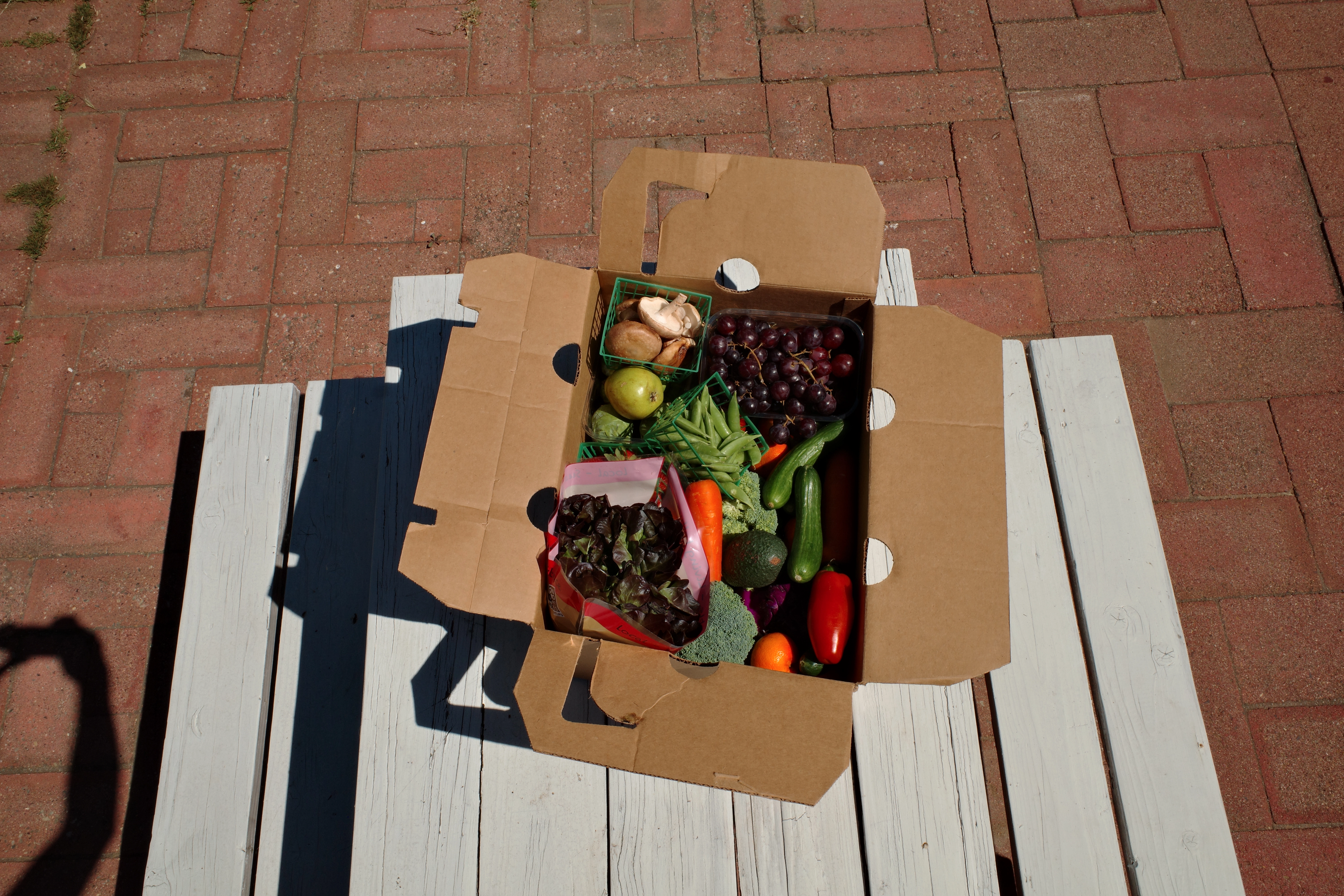

Packing day looks simple from the outside: vegetables go in a box. In practice, it’s a recurring logistics puzzle with perishable inventory, a hard deadline, and the looming threat of a soggy bag of lettuce by Thursday. There’s real science behind doing it well, and a surprising amount of it has been written down by people far more credentialed than someone with a packing table and a Tuesday deadline. Here are seven things worth knowing before you find them out the hard way.
1. Heavy on the bottom, delicate on top (obviously, but also scientifically)
This one sounds like common sense, and it is, but it’s also backed by real postharvest handling research. Dense, sturdy crops like potatoes, winter squash, and onions can take the weight of a box stacked on top of them. Leafy greens, herbs, and soft fruit cannot, and they’ll show bruising within hours under enough pressure. Pack root vegetables and squash at the bottom, rinse-and-go items like lettuce and herbs on top, and treat anything with a stem (basil, cilantro) like it’s made of glass, because structurally, it kind of is.
2. Keep the ethylene producers away from the ethylene-sensitive
This is the one most farmers learn the hard way before they learn it from a chart. Some produce, apples and melons especially, releases ethylene gas as it ripens, which speeds up ripening and decay in whatever’s sitting next to it. The UC Davis Postharvest Technology Center maintains detailed compatibility charts for exactly this, and the short version is: keep ethylene producers (apples, tomatoes, melons) away from ethylene-sensitive items (leafy greens, broccoli, carrots) whenever the box layout allows it. A box of perfectly good vegetables can go limp a day early just from bad neighbors.
3. Don’t wash before you pack, just triage
Counterintuitively, a lot of farms wash produce before boxing it because it looks more presentable. Most postharvest handling guidance, including extension materials from Cornell Cooperative Extension, recommends against washing anything going into multi-day storage. Added surface moisture accelerates rot and mold growth, especially on leafy greens. Field-dry the items, brush off visible soil, and let your members do the actual washing right before they cook. It looks slightly less polished leaving the farm, but it lasts longer in their fridge, and that’s the metric that actually matters.
4. Get the field heat out before the box gets sealed
Vegetables come out of the ground or off the vine carrying what’s called field heat, and that heat keeps respiration (and decay) running fast until it’s removed. The longer produce sits at field temperature before refrigeration, the shorter its shelf life ends up being, regardless of how good it looked at harvest. If you’ve got the setup for it, even a basic hydro-cooling dunk or a fast trip into a walk-in cooler before packing makes a measurable difference. If you don’t have cooling equipment yet, just minimizing the gap between harvest and refrigeration is the next best thing.
5. Use a packing list, not your memory
This sounds almost insultingly simple until the week you’re packing forty boxes at three different share sizes with two add-ons and a half-share substitution, and you forget the radishes for table four. A written, week-specific packing list (what ATTRA and most extension CSA guides call a harvest and pack sheet) turns packing from a memory exercise into a checklist exercise. The version of this that actually scales is having that list generated automatically from whatever you’ve already planned for the week, rather than rebuilt by hand every single Tuesday.
6. Tell people what’s in the box and what to do with it
This isn’t a packing tip in the literal sense, but it solves a problem that starts right at the packing table: members who don’t know what a kohlrabi is will not eat the kohlrabi, and eventually they won’t renew their membership either. Research from the University of Wisconsin Center for Integrated Agricultural Systems consistently finds that unfamiliar produce and lack of guidance is one of the main drivers of member churn. A one-line note covering what an item is, how to store it, and one easy way to cook it costs you almost nothing and meaningfully changes whether that item gets eaten or composted.
7. Brand the box, not just the outside of the box
A rubber stamp with your farm name, a variety list with a logo at the top, a recipe card with consistent typography: none of this individually changes the vegetables inside, but together it turns a delivery into a brand impression. The USDA Agricultural Marketing Service has documented in its direct-to-consumer research that the farm’s identity is a meaningful part of what CSA members are actually paying for. They’re not just buying produce; they’re buying a relationship with a specific place. The inserts, labels, and packaging are where that relationship either shows up or goes unnoticed. Members who open a well-presented box with a variety list and a farm note are also less likely to call the kale “that leafy thing” and abandon it in the crisper, so branding the inside of the box is really just member education wearing a nicer jacket.
The Common Thread
Most of these tips share the same underlying shape: a little bit of structure, applied consistently, prevents a lot of small losses that are individually forgettable but collectively expensive. A wilted bag of greens here, a confused member there, a wrong box at the wrong stop. None of it feels dramatic in the moment, but it all adds up by the end of the season.
That’s also the logic behind tools like Copia’s box template and harvest planning: turning “what goes in this week’s box” from a fresh decision every Tuesday into a plan you can adjust, print, and actually follow. The packing still has to happen, and the vegetables still have to be good, but the part that used to live in someone’s head can live on a packing list instead, which tends to survive a chaotic Tuesday morning a lot better than memory does.
Want to learn more about Copia?
See if our tools can help your farm grow on Shopify. $29/mo locked forever.
View Features